
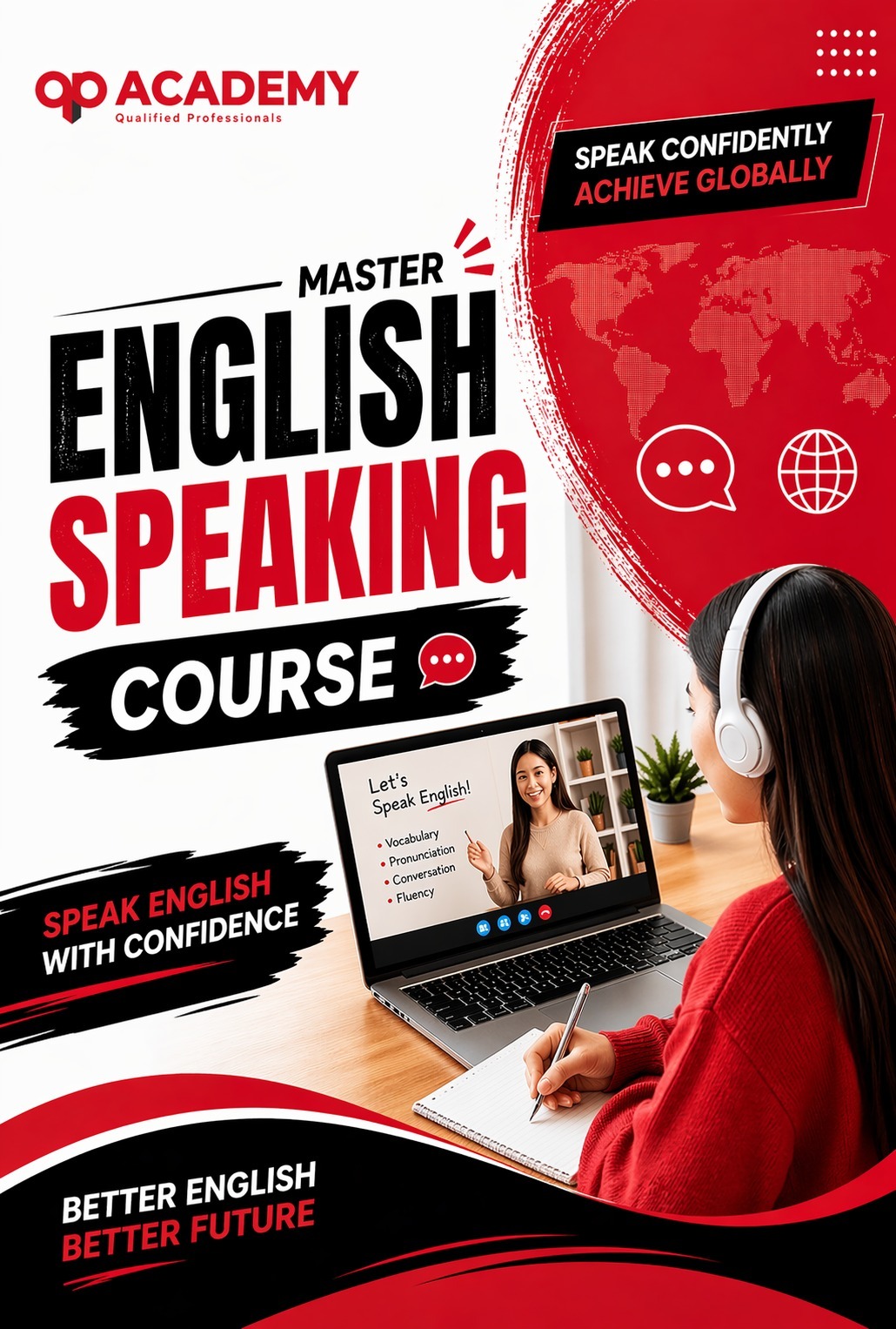

This intensive 8-week English Speaking Course is carefully designed for working professionalsand fresh graduates who want to build strong communication skills and present themselves confidently in professional environments. The program focuses not just on learning English, but on developing a professional personality with effective workplace communication abilities.
Across upto 32 interactive sessions, participants gradually transform from hesitant speakers into confident communicators. The course covers essential professional english communications required for introductions,travel and workplace, interviews, presentations, client interactions.

| Why Choose Our Program? | |
|---|---|
| Daily Conversations | greetings, small talk, family, neighbours, shopkeepers |
| Social Interactions | meeting new people, casual gatherings, phone and video calls |
| Workplace Communication | meetings, emails, instructions, polite requests |
| Job Interviews | self-introduction, common questions, professional presence |
| Short Presentations | opinions, explanations, talks to a small group |
| Travel & Public Interactions | airports, hotels, restaurants, directions, shopping |
What Will You Learn?
You will gain practical English skills for everyday and professional life — from holding a 3–5 minute conversation on familiar topics, to writing clear emails and messages, to delivering short presentations and answering interview questions with confidence. The course balances grammar, vocabulary, listening, reading, writing, and most importantly, speaking without hesitation insight into real-world BIM workflows.
Who Should Enroll?
Ideal for architects, engineers, BIM professionals, students, and construction teams who want to enhance their BIM knowledge, coordination skills, and project efficiency.
👩🎓 Who Should Enroll?
Ideal for adult learners, working professionals, job seekers, students, and frequent travellers who want to move beyond textbook English and start using the language in real situations with confidence and accuracy.
Module 1: Introducing Yourself & Daily Greetings
- Theme: Self-introduction, greetings, and basic conversations for first meetings.
- Grammar Foundation: Present simple (am / is / are), subject pronouns, and possessives.
- Vocabulary Building: Personal information, family, jobs, countries, hobbies.
Speaking Goal: Introduce yourself confidently in 60 seconds — clearly and without
freezing. - Listening & Reading: Listen to 3 sample introductions and read short personal bios.
- Writing Task: Write a 5–6 line self-introduction for personal and professional use
Module 2: Daily Routines & Small Talk
- Theme: Talking comfortably about your day, your weekend, and the weather.
- Grammar Foundation: Present simple (do / does) and adverbs of frequency.
Vocabulary Building: Time, daily activities, weather, weekdays.
Speaking Goal: Hold a 2-minute small-talk conversation that flows naturally. - Listening & Reading: Listen to two friends meeting and read a daily-routine blog post.
- Writing Task: Describe your typical day in 8–10 sentences.
Module 3: Asking Questions & Getting Information
- Theme: Shopping, ordering food, and asking for directions in real situations.
- Grammar Foundation: WH-questions, "Can / Could you…?", and polite request forms.
Vocabulary Building: Numbers, prices, food, places, transport. - Speaking Goal: Order food and ask for directions confidently — without hesitation.
Listening & Reading: Restaurant audio clips, menus, and street signs. - Writing Task: Write a polite request message, such as one to a hotel
Module 4: Talking About the Past
- Theme: Sharing experiences, weekend stories, and travel memories.
- Grammar Foundation: Past simple — both regular and irregular verbs.
- Vocabulary Building: Travel, events, emotions, and time markers (yesterday, last week).
- Speaking Goal: Tell a 1–2 minute personal story that holds the listener's attention.
- Listening & Reading: Short travel-story audio and a personal blog post.
- Writing Task: Write a short story about your last holiday or weekend.
Module 5: Workplace English
- Theme: Office talk, meetings, emails, and professional phone calls.
- Grammar Foundation: Modals (can, should, must, would) and polite forms.
- Vocabulary Building: Office items, job roles, meetings, deadlines.
- Speaking Goal: Make and respond to a professional phone call with confidence.
- Listening & Reading: A short meeting clip and two sample professional emails.
- Writing Task: Write a professional email — either a request or a follow-up.
Module 6: Future Plans & Opinions
- Theme: Talking about goals, plans, and sharing your views.
- Grammar Foundation: Future forms — will, going to, and present continuous for future.
- Vocabulary Building: Goals, opinions, agreement and disagreement phrases.
- Speaking Goal: Share your opinion on a topic and respond to others' views respectfully.
- Listening & Reading: A short opinion video and a brief article.
- Writing Task: Write a 100-word paragraph titled "My plans for next year".
Module 7: Interview Skills & Presentations
- Theme: Job interviews and short professional talks.
- Grammar Foundation: Mixed tenses and conditionals (if I were…, if I get this job…).
- Vocabulary Building: Strengths, achievements, and professional adjectives.
- Speaking Goal: Answer 5 common interview questions confidently and clearly.
- Listening & Reading: A mock interview audio and a sample resume.
- Writing Task: Write 5 strong interview answers and a short professional bio
Module 8: Real-Life Simulations & Final Project
- Theme: Combining every skill from Weeks 1–7 in real-world scenarios.
- Grammar Foundation: Full review with focused error correction.
- Vocabulary Building: Recycled vocabulary from all previous modules.
- Speaking Goal: Complete a real-life simulation and a final mini-project.
- Listening & Reading: Mixed authentic clips and current news headlines.
- Final Written Piece: Combined deliverable — email + paragraph + message.
What will you achieve?
Walk away with an industry-recognised certificate of completion — proof that you can confidently introduce yourself, handle workplace conversations, attend interviews, write professional emails, and use English in real-life situations. More importantly, you'll leave with
the one thing no certificate captures: the confidence to actually speak without fear of mistakes.